Saturday, our Master Gardeners had an opportunity to visit the new
Glenstone museum in Maryland outside Washington, DC. New is a relative term since it officially opened in 2006 with its first building. Others followed over the past few years, and the landscaping continues today. It occupies 300 acres (120 hactacres) of land in the uber-weathly, semi-rural suburb of Potomac, MD and its buildings display 20th century art.
"Glenstone is a place that seamlessly integrates art, architecture, and landscape into a serene and contemplative environment ...Guided by the personal vision of its founders, it assembles post-World War II artworks of the highest quality that trace the greatest historical shifts in the way we experience and understand art of the 20th and 21st centuries. These works are presented in a series of refined indoor and outdoor spaced designed to facilitate meaningful encounters for our visitors."
An urban museum cannot create a rural setting.
Landscaping the property began in 2010. On the visit, we recognize sustainability as a major objective through the building materials, permeable pavements, native planting, reforestation, stream rehabilitation, and even the cafe consumables.
These photos give a glimpse of the trails, paths, and landscape. The next post will present some of the spaces around the buildings.

Contour by Richard Serra
All rolling meadows are landscaped with native wildflowers, grasses, and sedges that support the native wildlife and "nurture a native ecosystem."

Split-Rocker -- Jeff Koons
All museums need a little whimsy. This sits atop a hill and is probably the most photographed.


Close-up with its irrigated geraniums, marigolds, begonias, few of which were blooming.

Fallen trees lay where they naturally fell or were cut to support the ecosystem. Lush, green, super-invasive
Japanese stiltgrass forms a problematic forest carpet.

Restored stream bed along the woodland trail.

Natural sculpture identification. The "sculpture" was two partially buried sinks.


Native blue flag
(Iris virginica)

Jack-in-the-Pulpit
(Arisaema triphyllum)

Native paper bark birch
(Betula papyrifera)

Careful little buddy. Don't get run over on the path.


 Chihuly sculptures indoors, too.
 Unknown
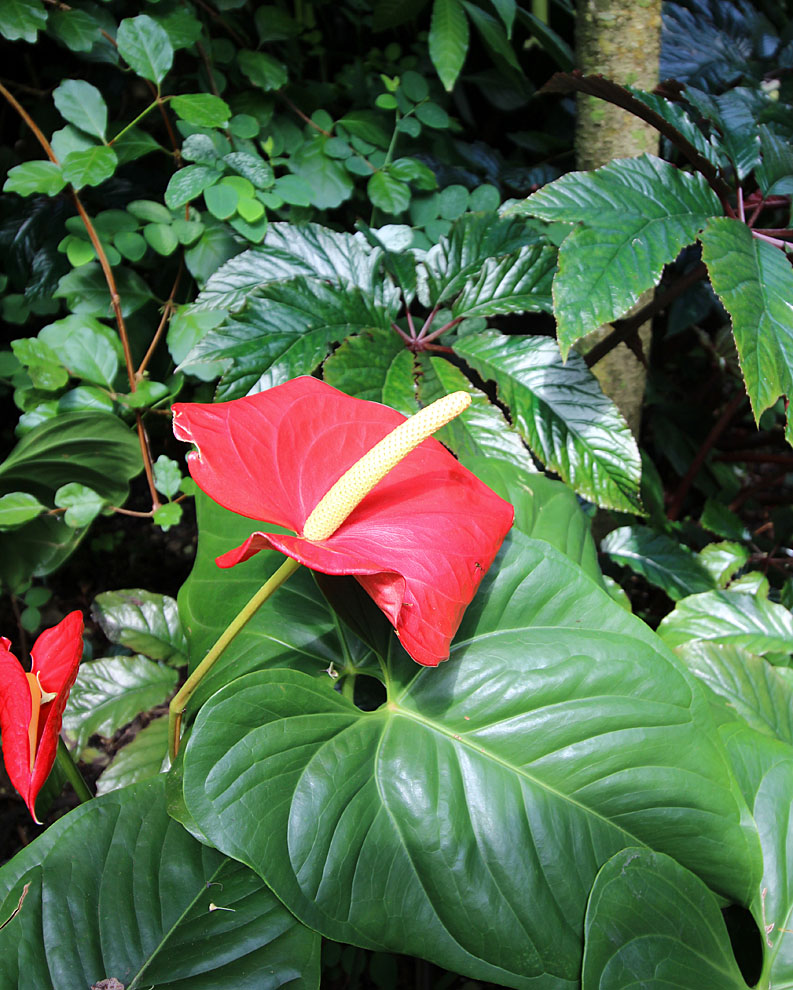 Anthurium
 Can't have a tropical Climatron without an orchid or two
 I have these cannas but not that good-looking
 One of the several garden pavilions with cooling interior fountain
 One of the intimate demonstration gardens with super colocasia
 The original caretaker's 'cottage'
 Path near the original owner's home - alocasia, coleus, caladiums
 Osage oranges falling
 Lighthouse garden folly
 Overhead trellis of gourds
 One last Chihuly sculpture at the entry hall
 Closeup to appreciate its beauty


