Showing posts with label redbud. Show all posts

15 April 2021

April 2021 Bloom Day

Garden Bloggers' Bloom Day
What's blooming in the garden on the 15th of the month

March and April are prime times for the garden. I did not believe I have a lot of spring blooms ... until I began assembling photos for this post. (Dandelions were not included.)

Some spring blooms here. Daffodils do very well and return in my climate, whereas tulips do not reliably return year after year - we progress from winter to summer very quckly, so after blooming, the tulips struggle through the heat to bulk up for the following year .

Narcissus poeticus - fragrant

'Rip van Winkle' planted many years ago and lost track of ... until last year.

'Bridal Crown' was a "I have some leftovers if you want" gift

'Sweet Love' cups turn white as they age
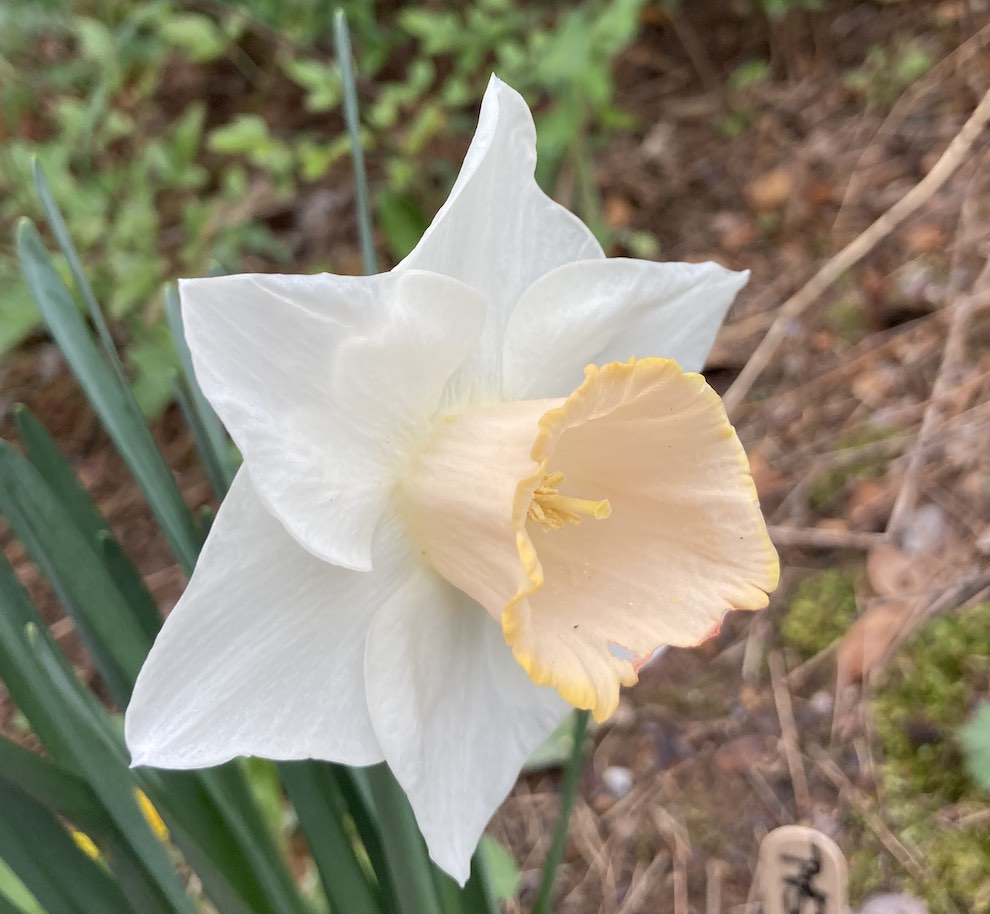
'Salome' cups start out yellow then turn salmon

Muscari - this one is a cultivar I think

Closeup of the redbud blooms

I want more of this free giveaway tulip because of the color, but I don't know its name. It displays incredible carmine red blooms and bluish foliage. It came back from past years, albeit smaller.

Closeup of leucojum after the rain

Pieris is suppposed to be difficult. Not in my garden, although after 5 years, leaf spot is beginning to show up.

Who can have spring in Virginia without our dogwood state flower.

Find other garden bloggers' posts at May Dream Gardens
18 April 2017

Now That You Mention It

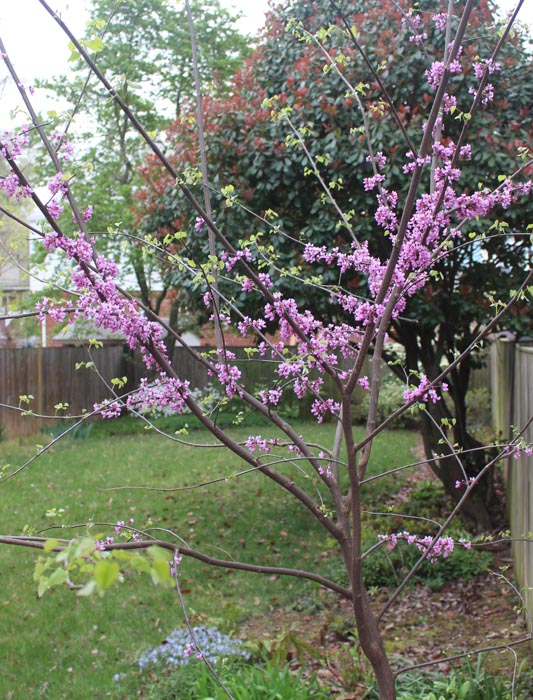
I recently read that the Eastern Redbud (Cercis canadensis) is a legume like beans and peas -- it manufactures it own nitrogen, adding it to the soil. Well, it actually uses its nitrogen-producing bacteria in the root zone that provide a beneficial relationship with the plants.

This is my second redbud. I wrote about my first one, a Chinese Redbud [posted 02.05.2014]. It grew from seed I received from the National Arboretum -- all volunteers received some. After fifteen years, never becoming large or blooming, it bit the dust.

The second was a single shoot seedling about a foot tall (30 cm) that I purchased from a local botanical garden plant sale from a local "native plant" group. I thought the Eastern US redbud would grow better than the non-native, and it did. After two years, it was 7 feet tall (2 m), but still produced no blooms in spring. After a 17 year wait, a redbud is finally blooming in my yard. Although flowers are found on old wood and are sparse, being such a young tree, any blooms are welcome after the long wait.

Beans, peas, lentils, clover, and peanuts are what come to mind when we talk of legumes. I just learned that the redbud goes on that list. But now that you mention it, redbuds do have some common characteristics of well-know legumes. Look are the leaves. The heart-shape looks very much like those of a bean plant. Look at the flowers closely. Don't the shapes look like blooms from peas, beans, or sweet peas? And the native redbud produces seed pods not unlike those of a string bean or pea.

For The Record:
  • Damp heavy clay soil with several years of rganic amendments -
    bottom of a slope
  • Light shade understory with partial sun
  • No fertilizer
  • No serious pests/disease yet


Garden Calendar:
  • Blooming: woodland phlox, ajuga, anemone, azalea, spirea, dogwood,
    virburnum, columbine, redbud

02 May 2014

The Deadbud And Friends

The winter damage to the garden is now coming into focus. The Chinese Redbud (Cercis chinensis) is now a 'red dud.' This is the most difficult loss. About fifteen years ago, I received a handful of Chinese Redbud seeds from the National Arboretum, as did other volunteers there. One the arboretum's heads went on a plant gathering expedition to China and came back with some material.

Pineapple Sage
Three of the seeds germinated. One was ripped up the following year, being mistaken for a weed. Another was probably run over by a mower. The third survivor, however, did not grow much over the years.

Three years ago, I made a real effort to improve its soil and encourage its growth and development. It responded, growing new branches and reaching about 7 feet tall (2m) last year. Every spring I looked forward to seeing it bloom, and every year I was disappointed. Just one more year of growth I thought.

I was excited this year again, but the buds on it swelled and then dried up. The branches and twigs are now dry and easily snap. Fifteen years of coddling, a tree planted from seed, and now it's all gone before blooming. I am hoping for some resurrection at its base if the roots are good, but so far there is nothing.

Cardoon?
Winter Damage Update
Totally unexpected, the pineapple sage is coming back to life. New shoots are appearing from the dead sticks; who can mistake that chartreuse color?

Rosemary has some tiny seedlings arrayed around the dead trunk. They are too small to identify as weed or foe, but will be watched as they mature in hopes that rosemary will rise again.

A surprise death is the cardoon. It grew throughout the winter as usual, but a spring thaw followed by a severe refreeze did it in. The stems turned to mush as a rot set in. There are some seedlings appearing near the old plants that again are unfamiliar. They could be weeds or could be cardoon seedings, which reportedly are somewhat invasive. Invasive would be nice this year.

California poppy seedling
Finally, the California poppies (Eschscholzia californica) are popping. Freely seeding themselves, maybe they will bloom by fall. The original plants have disintegrated this past winter.

For The Record:
  • Blooming: Azaleas, allium, wood phlox, salvia