Garden Bloggers' Bloom Day
What's blooming in the garden on the 15th of the month
I scrounged through my phjotos I have saved for Instagram postings, and took a few tonight before the sun went down. The 15th sneaked up on me this month.
Interesting story on this. If you snoop through past years of posts, you know I like growing different dwarf sunflowers. The last cultivar tried had some seeds I saved for the birds. I planted a few the following year, and saved these seeds and planted this year. The blooms are a nice manageable size, but they are not very drawf, stading at about 5-feet (1.5 m) tall, and do not match the original hybrid. I like the flowers though.
Tithonia is new to me this year. I am impressed by the pollinators that constantly visit it, and it's preference for poor soil, and a hot dry environment.
Cutleaf rudbeckia last week, Now, after some rain storms, it's falling over but still blooming up a storm.
This is the only ruby red zinnia 'Cherry Queen' I photographed so far. Hummingbirds stop by, but I don't really know how much they get out of the flower. Beautiful color.
Just starting to bloom now, the cardinal flower lobelia was labed as 'Blue Lobelia' at the spring plant swap. Oops.
Late summer blooming garden phlox. Another pollinator love.
Find more ther garden bloggers' blooms on May Dream Gardens.
Showing posts with label zinnia. Show all posts
15 August 2021
15 August 2015
August Bloom Day
The good news is that I have made three garden bloggers bloom days in a row. The bad news is that there is little else to show between the posts. However, I have three posts waiting in the wings, including my annual review of a dwarf sunflower variety. I will begin posting them next week.
Let sleeping bumblebees lie. The first dwarf sunflower variety is finisehd blooming, but the second one is now going full strong: Elf by Burpee.
This is Tiger Eyes marigold from Park Seed. There is something going on with this marigold that I have yet to figure out. It starts out looking bicolor like it supposed to. Then, it begins to change to a monocolor, maybe a little more yellow, then the bicolor, with larger bottom petals, then a deeper orange. I am thinking the environment affects its booms, like temperature, moisture, or fertilizer; or maybe all three. The plant is growing in three other locations, with one reseeded from last year. All exhibit different qualities at different times. (Note the red on the plant in the background.) Love these tough little guys though - sometimes so do the mites.
Rudbeckia hirti reseeds itself year after year wherever it wants to, and sometimes produces a few suprises like this one. Petals are narrower with a slight marking in the interior, and the color is slightly more orange than the others.
Leftover seeds were dumped in a corner of the front yard from this mix of zinnias. I don't remember a peach colored bloom last year.
The zinnia agustifolia love reseeding every year, popping up anywhere they please. I let them form a border. They are slow beginners, but really get going this time of year. The dead looking stuff is dill gone for the summer. I am an untidy (..lazy?) gardener in August.
Black Pearl ornamental pepper from the winter Seed Exchange forms a handsome color combination. Dark purple foliage turning green, shiny black peppers ripen to a scarlet red. Pretty enough to eat ... and incinerate your insides.
In front of the colocasia, the buddleia looks full and neat because I keep pinching it back during the spring. This also delays bloom a little.
One of the many visitors to the butterfly bush, a Great Spangled Fritillary.
For other garden bloggers bloom day photos, check out our host at blog May Dreams Gardens.
Let sleeping bumblebees lie. The first dwarf sunflower variety is finisehd blooming, but the second one is now going full strong: Elf by Burpee.
This is Tiger Eyes marigold from Park Seed. There is something going on with this marigold that I have yet to figure out. It starts out looking bicolor like it supposed to. Then, it begins to change to a monocolor, maybe a little more yellow, then the bicolor, with larger bottom petals, then a deeper orange. I am thinking the environment affects its booms, like temperature, moisture, or fertilizer; or maybe all three. The plant is growing in three other locations, with one reseeded from last year. All exhibit different qualities at different times. (Note the red on the plant in the background.) Love these tough little guys though - sometimes so do the mites.
Rudbeckia hirti reseeds itself year after year wherever it wants to, and sometimes produces a few suprises like this one. Petals are narrower with a slight marking in the interior, and the color is slightly more orange than the others.
Leftover seeds were dumped in a corner of the front yard from this mix of zinnias. I don't remember a peach colored bloom last year.
The zinnia agustifolia love reseeding every year, popping up anywhere they please. I let them form a border. They are slow beginners, but really get going this time of year. The dead looking stuff is dill gone for the summer. I am an untidy (..lazy?) gardener in August.
In front of the colocasia, the buddleia looks full and neat because I keep pinching it back during the spring. This also delays bloom a little.For other garden bloggers bloom day photos, check out our host at blog May Dreams Gardens.
03 November 2014
Last Gasp Before Winter
| Most of the garden has fallen asleep before winter arrives, but some defiant plants refuse to give up. Acidanthera, members of the glad, family look as lush and healthy as a summer day. They continue to flower, albeit with fewer blooms than in summer. |
The pineapple sage (Salvia elegans) is in its glory at this time. It waits until just before frost to throw out its red threads against its chartreuse foliage. This year the plant really took off after a severe winter that I thought would have killed it off like its neighbor the rosemary. Now, every day brings new branches tipped with new flower buds. I wonder what this would look like after one more frost-free month.
| The tricolor ornamental peppers Garda did not grow as large as last year when it was in a pot on the raised deck. Even though this year in ground, it received a little more sun. I am thinking the rich soil in the pot gave the plants there a boost. These peppers are a favorite of mine with their circus colors. Fruit starts out a light cream color, then turns purple, then turns orange, then turns red. Yes, they are edible and incredibly hot. |
Zinnias never give up. Even if all their leaves have turned crispy brown in the crisp autumn temperatures, they want to keep on blooming. The free zinnia seed mix curiously have only the red ones going strong. Pinks, purples, and yellows died out.
The overnight lows are flirting with freezing, but these friends are holding out until the end after their comrades gave up.
Labels:
acidanthera,
fall,
pepper,
pineapple sage,
zinnia
30 August 2013
They Look Like The Catalog!
| Every year, we try out new recruits for our gardens. In 2013, catalog items that caught my eye and caught my wallet were listed in a February post [2013.02.16], and I am happy to report that we have a few rookies worth writing about. The three year old seeds for veteran Canary Bird Zinnias from Baker Creek were planted again. Being yellow, they were placed in the front garden near the pink cleome to keep away from the yellow rudbekia in the side yard. They responded well again where the soil is luscious and sun is plentiful. In fact, a few popped up in other areas of the yard from last year's plants seed deadheading. |
To keep the gardens from being monochromatic, the new pink Pinca zinnias were planted on the side yard with rudbeckia, with sloping terrain, where soil is still improving, and where sun is diminishing due to an ever expanding neighbor's tree. The beginning blooms are incredibly delicious, and one can get up close to them at side yard walkway. The pink color looks great next to my first year lavender Russian sage (not intentional, but I will take credit.)
To date, height is a short 24-inches (60 cm). Being in a mostly sunny area (as opposed to full sun) probably slowed their bloom time since the yellow Canary Birds in the front have been blooming for weeks. What stood out in the catalog photo was the ragged square-edged appearance of the petals. Happily, the 4-inch (10 cm) bloom matches the seed company's photo and description.
I have shied away from marigolds in recent years, just tiring of them. A photo of Tiger Eyes at Park Seed reminded me that they haven't been here for years. There were not many seeds in the packet that came, so only six plants were started with the remainder saved for next year. They are now at their peak, loving the slightly cool summer weather we have.The marigolds have been religiously deadheaded, and have responded. They are my border guards, hugging the border edges here and there around the front yard garden. Compact, full, no pests, and lots of consistent intense-colored flowers make this one look happy. Sometimes marigolds can become large and gnarly, and tip over, but these have remained strong. The dark green luxurious looking foliage is an added bonus.
Garden Calendar: Blooming: mexican zinnia, zinnia, marigold, cosmos, rudbeckia, echinacea, sage, goldenrod, buddleia, cleome Harvested: 2 pepper, 4 tomatoes, 2 zucchini |
30 August 2011
Zinnia-mania
In the past I viewed zinnias in the same way as marigolds and petunias. They were easy annuals that grew and flowered nonstop through the summer, became ungainly toward the end of summer, and then succumbed to fall disease or needed to be taken out because of their old age. Let's hope I don't have the same fate in my old age.The Tall Zinnias
However, I have since appreciated one trait that zinnias have over the other two: they make a good cut flower, and come back after cutting. The flowers can also last a while on the plant like marigolds, and come in more color varieties. For the last few years I planted Violet Queen - a supposedly purple (but more pink) tall, double flowered variety (Zinnia elegans). Like most zinnias, some were double flowered and some were not.
This year with the Violet Queen [past photo] seeds running low, I ordered yellow Canary Bird zinnia to plant amongst the remaining 'purple' Violet Queen and keep them company in the side garden. Most of the purples did not germinate- (if a good photo of both together develops later this year, I will post it.) The yellows flying solo in the front garden receive more sun. The soil is also better there, having been worked on for more years. I can report that Canary Bird is a winner.More of the blooms are double-flowered than the violet. They also began blooming a bit earlier than the violet, and have more branching with blooms than the straighter violet. The color is spectacular, I believe because the blooms are the same color as the anthers and stigma. This is one worth planting again.
The Short ZinniasOne year I purchased a mix of a few babies called Mexican Zinnias (Zinnia augustifolia) or narrow-leaf zinnias: white, yellow, and orange in the mix. Without me knowing, they reseeded themselves behind my back and came back the next year in the two places where they had been the previous summer. I was tearing out the infants as weeds since I did not recognize them. The leaves on the seedlings looked similar to a salvia growing nearby, so I let a few grow to see if they were weeds or salvia. Yellow zinnias began blooming.
I also stopped decimating the volunteers in the other bed where they had been growing the previous year. Orange flowers began to emerge there. Since then, I have kept the yellows in one bed, and the orange in another along the walk, and they reemerge every year from their own seed. I give a few away and transplant a few when starting growing in the spring. Funny, but none of the whites reseeded and came back.

This year, after about 5 years of remaining separate, a few yellows came up in the orange bed. What audacity and impudence. I will attribute this to an increase in butterfly and bee activity last fall, beginning about this time of year. Although I would prefer a uniform color, I let it happen. Zinnia augustifolia needs to grow before exposing the flower color. By then, they is too big to think about ripping out. And at this size, they do not like being transplanted.

The plants start out very, very slowly in the spring and develop for a month. Another month of growth producing leaves, a few blooms pop out. Then all of a sudden in midsummer heat, they explode and go wild, developing into the masses you see in the photos.
What I really like about these, in addition to the reseeding, is their ability to naturalize and neatly spill over the edge of the walk like the alyssum without becoming a nuisance. They do not make good cut flowers, since their habit is one of a tumbleweed. Their beauty is in numbers. I tried saving orange seed and starting indoors this spring. I had some success, but the germination rate was not good.
For The Record: Heavy clay soil with gypsum & organic amendments Full sun is best Small amount of fertilizer Tall zinnias tend to develop powdery mildew in autumn when temps cool No pests or disease on the dwarf zinnias Garden Calendar: Blooming: Mexican zinnia, zinnia, cosmos, salvia, sunflowers, rain lily, rudbeckia, daylily Harvested: 2 peppers, 4 tomatoes Removed: Cherry tomatoes, cucumbers |
15 August 2011
August 2011 Bloom Day
Garden Bloggers' Bloom Day
What's blooming in the garden on the 15th of the month.
Mass blooms are highlighted this month. First up is the cleome that ate Alexandria. This out of control monster does a good job of scaring away the neighborhood kids. Dwarf sunflowers cower in fear at the other side of the yard. Across the walk are some Mexican zinnias continuing to spread and merge into one large clump.
The hedge of cosmos feeding the bumblebees are showing their age with fewer blossoms and thinner plants. My canary yellow zinnias are new this year and live up to their name. If I can only keep the finches from plucking off the petals to get at the seeds, they would be spectacular.
And the sweet alyssum is flowing and oozing onto the brick pavers, providing a delicious fragrance and giving some contrast to the frog - my garden bling.
Find other garden bloggers' bloom days at the blog May Dreams Gardens.
What's blooming in the garden on the 15th of the month.
Mass blooms are highlighted this month. First up is the cleome that ate Alexandria. This out of control monster does a good job of scaring away the neighborhood kids. Dwarf sunflowers cower in fear at the other side of the yard. Across the walk are some Mexican zinnias continuing to spread and merge into one large clump.
The hedge of cosmos feeding the bumblebees are showing their age with fewer blossoms and thinner plants. My canary yellow zinnias are new this year and live up to their name. If I can only keep the finches from plucking off the petals to get at the seeds, they would be spectacular.
And the sweet alyssum is flowing and oozing onto the brick pavers, providing a delicious fragrance and giving some contrast to the frog - my garden bling.
Find other garden bloggers' bloom days at the blog May Dreams Gardens.
![]() | |||
| Cleome hassleriana | |||
![]() | ![]() | ||
| Helianthus annuus "Waooh" | Zinnia agustifolia | ![]() | ![]() |
| Cosmos sulphureus | Zinnia "Canary" | ||
![]() | |||
| Lobularia maritima | |||
| Garden Calendar:
Harvested: 8 cherry tomatoes, 3 cucumbers, 2 chilis, 2 tomatoes |
15 August 2009
August 2009 Bloom Day
12 November 2008
Waiting On The Frost
The end of the season comes to an abrupt end when the killing frost comes. It is a final exclamation point to the summer season, and signals the time to begin the big cleanup in the yard that includes cutting out the dead material, leaf mulching, and planting spring bulbs. The problem is that this year has seen no killing frost yet. Mid-October is the normal time around here. I hate ripping out plants still growing, even if they are on life support, so I wait.There is yet some color in the front display garden. The cosmos [27.6.2008] are all but gone, but a few flowers continue on, making them even more striking against the dark brown backdrop of the jumbled mass of dying twigs. Their fiery red color is now a soft warm yellow. The suspicion is that either the cold weather, or short days and lack of sunlight cause them to lose color, or maybe both. At this time of year, several plants, mostly annuals, change from their normal habit and appearance but continue to hang on.
The cannas [24.7.2007] have never multiplied like they did this year. The flowers are not as abundant now, but this variety keeps on giving with their variegated zebra leaves. These leaves are now the eye catcher in the garden because of the size and quantity.
What can be said of these miniature Mexican zinnias (zinnia agustifolia)? These little fellows refuse to give in to the season and continue to look as healthy and fresh as when they were planted. They were purchased in spring to fill in where the grape hyacinth foliage was going to die off. They neatly spread into mounds of ever-blooming color, and continue to this day, fighting to the finish for attention with the canna leaves.Other holdouts include everlasting green flowering nicotiana [17.7.2007] and purple-leaf basil with its light purple blooms. The purple salvia has also sprung back to life after some cutting back and deadheading last month.
Garden Calendar: Blooming: purple salvia, green nicotiana, cosmos, canna, basil, zinnia Leaf color change: star magnolia, dogwood, chinese redbud, hostas |
23 August 2008
...The Bad, and The Ugly
This blog (and most others) document gardeners' successes and perfection with pride. It's time to come down to earth. This week you will find the summer failures. It takes strong fortitude and courage to share failures with the world. Learn, offer your own advice and experience, and take a walk with reality.Tomatoes
Tomatoes are always started from seed each year. Over the last few years, the variety Early Girl was planted, hoping to gain as many tomatoes as possible before the four plants start their annual summer tailspin. This year, Better Boy was tried. The fruit ended up being larger than Early Girls, but thankfully produced just as early. As in every year, they begin with promise and healthy growth.
Then in the height of the summer heat as the fruit begins to ripen, the leaves begin curling, especially the new leaves. Leaf color goes from green to looking like they were speckled with white powder. Then the leaves dry up and die. The plants are now 6-feet (1.8 m) tall, growing above the stakes, and looking very pitiful. After the cooler weather starts in late summer and fall, new healthy leaves form at the tips of the stalks, blossoms emerge again, and we are back in business producing a small crop before frost.The suspicion is that first, there is not enough sunlight, causing the excessive height and long stems. Second, I think the hot dry weather brings tiny tiny mites - this same type of tiny speckled light-ish green leaves appear on the sunflowers, marigolds, zinnias, and asters. Third, because of limited space, the tomatoes are planted in the same area every year, promoting overwintering of disease. But, some nice tomatoes are harvested each year before the plants go bust. This bounty pictured is from mid-July. (Notice the three tomato-scented candles on the window sill.)
SunflowersNext, the sunflowers: holy-leaf! These holes get larger and larger as the season goes on, and whatever chomps on them only comes out at night - late night. The critters that do this damage have never been caught or seen, although not for a lack of trying. It happens worst nearest the ivy ground cover, so slugs are suspected. But, slugs are cleared out early in the season, and no slime trails are ever seen. I suspect the beasties hide in the ivy during the day - the same damage does not appear on the backyard sunflowers. Crickets? Beetles? Earwigs?
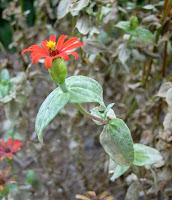
ZinniasThese zinnias are red spider zinnias - much smaller than I expected, and much more susceptible to powdery mildew. Based on experience this year, these are not recommended since they were short, had smaller blossoms (some no bigger than a dime), made poor cut flowers with their short stems, and were powdery mildew magnets.
OreganoThe small-leaf sweet oregano is ancient - probably 20 years old. This spring, its growth was stunted for some reason, and the usual 6-inch tall (15 cm) stalks with the leaves never appeared. The plant with its spicy leaves only grows in the cooler weather of spring and fall, so fingers are crossed that it will start to take off again soon. The flowers are produced in late summer and are always cut back to encourage fall growth. Maybe cutting the plant back to the ground will encourage new leaves this fall, or kill it for good.
FungusAlien invaders sprout up from time to time almost overnight. One year, a 'cat puke fungus' appeared in the front yard mulch. I thought it was exactly that, and after closer examination (umm, yes I did get closer) the blob was discovered to be a fungus, so I named it after its resemblance. An internet search seems to match descriptions and photos for a 'jelly fungus'. That irregular shaped fungus appeared as a coating on the mulch - orange and white and shiny - looking like the wet guts of a pumpkin thrown on the ground. However, cat puke elicits a more accurate response to its appearance. (It added some summer color to the shady spot under the mountain laurel.) This year, the 4-inch high (10 cm) E.T. fungus has landed. There are actually two growing, and nothing resembling this asymmetrical creature can be found in the online fungal photo directories.
Garden Calendar: • Blooming: silver salvia, nicotiana, cosmos, sunflowers, canna, zinnias, castor, basil • Harvested: 15 tomatoes • Bell peppers begin turning red |
Subscribe to:
Posts (Atom)


