14 March 2020

Out of Nowhere

I am ready to start sharing my garden again. Now, I know that everyone has seen a daffodil. But this one is special. It came from nowhere in the middle of the bed of iris that I planted from my own cross-breeding seeds. It is not one that I planted, recently or in the distant past because I do not like these double flowered types and would never have planted them. I have a few possible explanations:
  • It grew spontaneously. This may be true, but it I, unlike some presidents, believe in science - daffodils don't just appear out of nowhere.
  • I planted it in the past when it accidentally got mixed in a batch of other types at the store. It then grew legs and walked down the hill and planted itself in this location.
  • Some of my other daffodils had a night of passion one year, and this is the result.
  • It was there for a time and this year got large enough to bloom. Yes, I believe there were daffodil leaves there in the middle of the iris iris bed last year with no blooms.
  • Someone or some animal known to dig up bulbs did so from a neighbor's yard and planted it here years ago, and it got enough food stored up this year and bloomed.
I have lived here for 31 years, and never saw this daffodil on the property. There is one more bloom in the same "clump". I checked the immediate neighborhood -- no one had this type of daffodil.

Offer your own explanations.

01 January 2020

Missouri Botanical Garden Afternoon

Apologies for taking so long to cull and post more of the Missouri Botanical Garden photos. Continuing on, the afternoon time was spent in the Climatron - (the tropical greenhouse) and the areas around that western section of the grounds. On this particular day, it was cooler inside the structure that it was outside.


Chihuly sculptures indoors, too.

Unknown

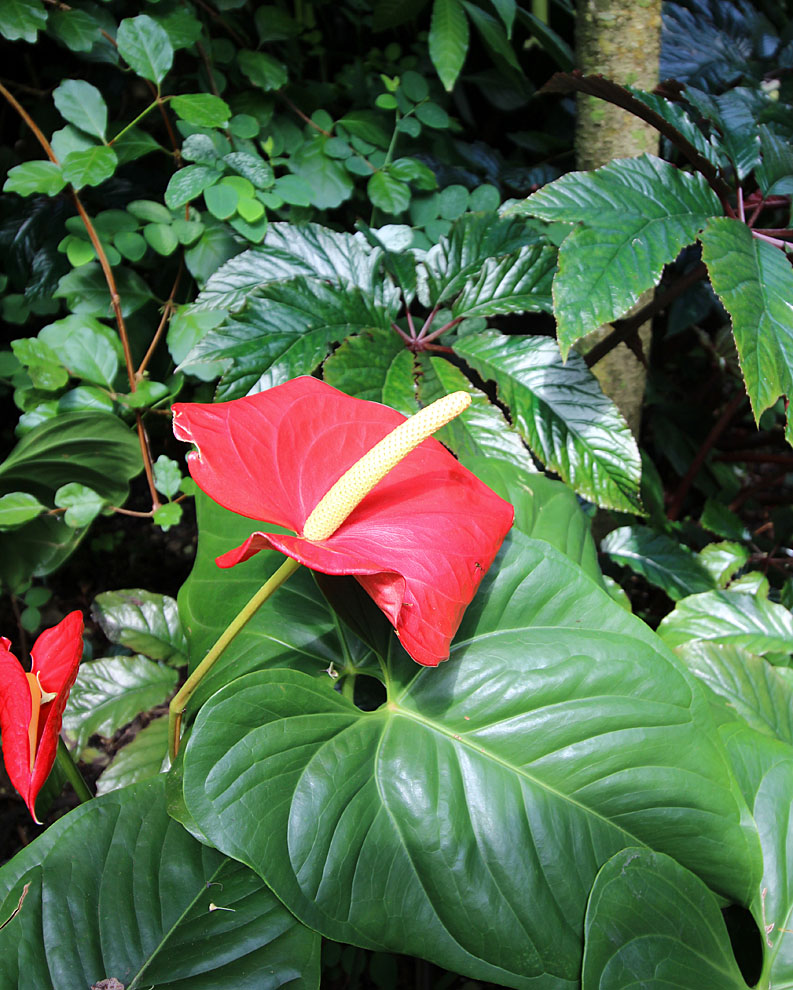
Anthurium

Can't have a tropical Climatron without an orchid or two

I have these cannas but not that good-looking

One of the several garden pavilions with cooling interior fountain

One of the intimate demonstration gardens with super colocasia

The original caretaker's 'cottage'

Path near the original owner's home - alocasia, coleus, caladiums

Osage oranges falling

Lighthouse garden folly

Overhead trellis of gourds

One last Chihuly sculpture at the entry hall

Closeup to appreciate its beauty

17 November 2019

Missouri Botanical Garden Morning

In September, my annual convention took me to St. Louis. In my time before the convention began, I of course blocked out a full day for the Missouri Botanical Garden. I suspected this was one of the tops in the world, and my trip confirmed my suspicion.

Some facts for the botanical garden:
  • Founded in 1859 with 79 acres on land provided by wealthy immigrant Henry Shaw
  • Center for scientific botanical research
  • 1800 species in the daylily garden, and 1500 species in the iris garden
  • Over 50 water lily species (blooming while I visited)
  • Incredible web site for references and information
  • 24,000 square feet interior geodesic dome Climatron (enclosed greenhouse)

Some of my images that impressed me from the morning of my long, sweaty, late-summer day follow.

One of the water lily pools with Chihuly sculptures and the tropical greenhouse 'Climatron' beyond. I thought the large colorful sculptural balls detracted from the beauty of the water lilies.

Closeup of some water lilies.

Another Chihuly creation for the seating areas within one of the rose gardens.

Interior of the historic conservatory, probably the original.

The Ottoman Garden, a walled garden with Mediterranean plants, shady walks, water ...

... and an inward-looking perspective.

And an early sundial for timekeeping.

The playful fountain jumps from one pool to another overhead almost like it is alive and toying with you.

A landscaper's view of the Japanese garden based on open vistas of natural and harmoniously placed vegetation.

A carefully composed view from the bridge.

A Chinese garden with its more intimate enclosed spaces and landscape.

08 November 2019

Autumn's Late Late Show

I occasionally spotted these around town blooming in very late autumn and often wondered what they were. When I discovered their name, I filed it in the back of my mind in the I need to get these some day folder. Then the chance came.

During a Master Gardener plant swap a few years back, a fellow gardener brought in some chrysanthemum labeled as Sheffield, with maybe 'Pink' in the name. I recognized that the name was familiar, but could not place it. After a quick search on the internet I discovered it was my 'Sheffield Pink' Chrysanthemum. I could not be happier to take it home.

It went into the side yard garden, and in a few years, has grown and spread -- not neatly, but rather haphazardly. Starting out slowly, it looks like nothing's happening throughout the summer -- no hint of what to come later. Sheffield Pink blooms in late fall when most everything else in the garden has past its glory.

A little untidy when compared to the artificial-looking mounding mums, it seems at home in a natural cottage garden and might even be considered as a ground cover because it easily multiplies with no attention or help from me.

It has past blooming a few weeks ago, but I snapped a few pictures at that time for a story. Just after the first frost, it was little past its prime.

For The Record:
  • Moderately clay soil
  • Well-drained soil at top of sloping bed
  • Mostly sun but some shade during mornings
  • No fertilizer
  • No serious pests/disease

03 November 2019

Popup Petunia

These purple petunias are spilling from a container on the back deck. This is noteworthy only in that they were self-sown seeds, survived winter in the container, and grew in spring. While deciding what to plant in the containers this past spring, I spotted about two dozen petunias sprouting where they had previously grown.

Now, petunias are one of those difficult plants to start from seed indoors, being small and taking their time to develop into something that blooms. I've tried. They are so much easier to buy in a nursery.

I had no idea what would bloom this spring after spotting the tiny leaves popping out. While growing up in New York, my mom had annual petunias that reseeded every year. They were a mix of colors -- purple, pink, white, magenta -- and were not large sized. This is what I was expecting.

What grew in my container ended up being dark purple hybrid-size blooms. I think I had these last year, or was it the year before? Two red blooming petunias in the bunch were a mystery -- I had never grown red petunias in there.

The red coleus is "Ruby Slipper". It did nothing all summer, and is only now, just before our first frost, beginning to look like something.

08 October 2019

Winterthur

A late summer visit to Winterthur in Delaware provide a relaxing get-away for a day. This Henry Francis DuPont estate and grounds consists of gardens, garden follies, and a home of 175 rooms. He was a collector of American Decorative Arts -- furniture. The estate grounds and gardens were not impressive at this time of year since the azaleas, spring bulbs, flowering shrubs and trees were not at their peak. Lots of summer blooming hostas, though.

View of the house with outdoor dining terrace overlooking the rear garden.

Garden folly near the house rear.

House from inside the garden folly.

Fish pond at the rear gardens with a walking path around the perimeter.
The trees create a shady "room" in this area.

More formal rear garden with fountain.

Big beautiful colocasia.

Entrance over bridge to the children's garden: the 'Enchanted Forest'.

Cottage in the Enchanted Forest - I really think I could live here.

Enchanted Forest surprise.

Giant nest with eggs in the Enchanted Forest - dragon?

21 September 2019

It's Chili Time

Two peppers are being harvested right now and both are front cottage garden products. First, the Japanese Shishito peppers. I grew these a few years ago in the front yard alongside the pepperoncini which I came to love. They were mild and made excellent pickled peppers with salt, vinegar, pepper, and garlic. The Shishito did not make good pickled peppers -- they were softer, thin-walled, and had lots more seeds. My biggest problem with them is that they were a roll of the dice when it came to "hot or not." For no obvious reason, some were hot, and some were mild - from the same plant harvested at the same time.

I saved the pepperoncini seeds and started them this spring, but what came up were Shishitos. I saved the wrong seeds. After last week's vacation, I came home to ripe red Shishitos, so here they are. I have had them on a burger and in salsa, but taking all those seeds out is time-consuming and I would rather be just consuming. They are edible, and recipes abound for roasted or grilled Shishitos, seeds and all. I know they are currently a trendy pepper, so maybe I should give some away to enhance my image as a trendy gardener with the latest and greatest.

The Anaheim chilis have another story. I grew them about five years ago in the back vegetable garden with very little success. Maybe one or two small peppers came from them. I tried them again on the side yard where they became engulfed by rudbeckia, never to be seen or heard from again. I tried them again the following year in the sunny front. They were slow-growing and again, I may have had one or two. End of the seed packet; end of Anaheim chilis.

This spring, I spied a seed packet of Anaheim Chilis at a Master Gardener function -- free for the taking. Dare I try for more disappointment and misery? Of course. The were fertilized, planted in the sunny front again, and this year, we have Anaheim chilis! I do like them because they are "mildly hot" and are great on burgers, in salads, or grilled. One discovery I have made: pick when turning red, and leave out to turn fully-red. For some reason, leaving them on the plant to fully ripen brings out a little black rot on the fruit interior.

If at first you don't succeed, try and try and try and try again.

For The Record:
  • Mostly rich, well-drained soil
  • Full sun
  • Small amount of fertilizer
  • No serious pests/disease

24 August 2019

Wrong Side of the Bed

I have a very small lawn area in the front of the house. Half of the front yard is lawn, the other is my cottage garden with its tastefully arranged mix of annuals, perennials, and vegetables. The annuals are those that reseed themselves such as basils, dill, Mexican zinnias, rudbeckia, snapdragons, nicotiana, cosmos, and cleome. It's heaven for a cheap gardener like me.

I provide a little pre emergent herbicide on the grass (excuse me - for us Master Gardeners that's turf) to keep the crabgrass from finding a home. This year, a few lemon basil plants thought the grass area with its pre emergent looked like greener pastures and moved out into the lawn. No crabgrass from the pre emergent, but basil found a home.

Now to be fair, this is not the first time plants have jumped out of the garden and ventured out into the lawn. But it is the first time edibles have done so. Every year, some rudbeckia and cleome need to be scolded, bad boys as they are, sowing their wild oats in my grass. Nicotiana and poppies seem to delight in popping up across pavement or in the brick sidewalk cracks. But now the basil? And not just one plant, but four decided to run away from home? They are all grounded.

You have to admit, the basil looks happy and healthy there. Yes, most of their friends remained growing in the garden bed, although most had gone to seed at this time of the year.

Please ignore the wild looking grass and clover in the lawn. I let these basils grow and purposely did not mow the grass, and the hot summer slowed the grass growth down. And, the grass just looks more wild than it really does in person. Enough excuses?

11 August 2019

What's Your Name?

I picked up some of these plants at the Master Gardener spring plant swap last spring. Seems like eons ago. I don't recall any name on them, but they ended up being planted in the way-back -- mostly sunny, some shady area without much good soil. I am slowly building up the soil in this plot with more organic material in hopes of growing additional perennials.

During the fall (last year) they reached a height of about 3 feet (1 m) and bloomed near the end of summer. They dutifully popped back up this past spring, then towered to 6-feet tall (2 m), much higher than I was expecting.

The leaves are partially lobed, lacy, thin, somewhat palmate, a little like oversized cosmos, and nothing like sunflowers or any other helianthus I know. The blossoms are pure yellow, similar in size and appearance to double-flowered coreposis, around 1-2 inches (3-5 cm). But coreopsis does not grow this tall. Nor do coreopsis leaves look like this. Japanese kerria is similar, but this is not a shrub, nor do the leaves match. No fragrance. Dry conditions do not bother it much, and there are no signs of disease or insects. However, powdery mildew is beginning to show up.

They die back to the ground in winter. They have continued to bloom over the past month but are beginning to slow down. I previously thought the stalks were strong and sturdy, but a recent rainstorm knocked most over. They were strong and straight while growing, but once the blooming started, they could not stand up to wind and rain.

Are they in the coreopsis family? Are they a form of helianthus? They seem happy where they, so they will remain there.

For The Record:
  • Clay soil with a little organic mulch
  • Mostly sun but some shade
  • Small amount of fertilizer
  • No serious pests/disease
  • Tend to fall over when fully grown