27 February 2009

Crocuses Never Croaked

The first signs of spring have popped up. After the house was purchased 20 years ago, these species crocuses (Crocus chrysanthus) were found growing along the walk-out basement foundation, near the east-facing basement door. Sometimes called Snow Crocus, these have consistently bloomed every year with no attention or care.

Late fall, a new raised deck off the first floor was constructed over this area. Construction debris was left about throughout the winter, and only the early morning sun penetrated into this area. But the crocuses came back, diligently poking through the pieces of wood and straining to bloom again in a newly- shaded spot. I believe this is finally the year to move them. A new location must be found where they can be better-appreciated in early spring, and where they can enjoy the early spring sun and thrive.

Years ago, hybrid Dutch crocuses were planted. These had larger flowers, bloomed later, and came in more variety of colors than the species crocuses. However, these hybrids did not multiply much, and the plants and blooms shrunk more and bloomed less each year.

For The Record:
  • Heavy compacted soil
  • Partial sun, now mostly shade
  • No fertilizer


Garden Calendar:
  • Blooming: species crocus

23 February 2009

Presidents Day Cactus

Many years ago a Thanksgiving Cactus (Schlumbergera truncata) was purchased after the death of the Christmas Cactus. The Christmas Cactus was always a bit gaudy with its intense red-pink blossoms. The Thanksgiving cactus looked more serene, more different and unique - a 'requirement' for 'serious' gardeners.

The difference between the tropical Christmas and Thanksgiving cactus is that the Thanksgiving has sharper serrated leaves as compared to the more rounded leaves of the Christmas cactus. And the Thanksgiving cactus is supposed to bloom during November, when Thanksgiving is celebrated.

In the past, this one has bloomed at any time between Christmas and February. This year it picked Presidents Day. I could have begun the bloom earlier by exposing it to cold earlier (like keeping it outdoors during the fall), but I am happy for something blooming this time of year.

13 February 2009

Is this normal?

These photos were taken way back in December. Both the grape hyacinth and blue dutch iris bulbs were left in the ground after last year's blooming for the first time. Now, just as winter begins in December, they are undergoing a spurt of growth - poking their heads out of their beds. Not just sneeking a peek, - but judge for yourself!

Will these plants survive the winter after the massive bust of green growth at this time of year? Will they even bloom when spring comes along? They were not fertilized in the fall, so what gives? Is this normal?

08 February 2009

Jack Frost Paints With Roller

Frost on the car this morning created a very unique pattern never seen before. It is as if the pattern was made with a broad brush or roller rather than a small brush. This frost was found not only on the windshield, but also on the car itself.

Not much happening this time of year.

12 November 2008

Waiting On The Frost

The end of the season comes to an abrupt end when the killing frost comes. It is a final exclamation point to the summer season, and signals the time to begin the big cleanup in the yard that includes cutting out the dead material, leaf mulching, and planting spring bulbs. The problem is that this year has seen no killing frost yet. Mid-October is the normal time around here. I hate ripping out plants still growing, even if they are on life support, so I wait.

There is yet some color in the front display garden. The cosmos [27.6.2008] are all but gone, but a few flowers continue on, making them even more striking against the dark brown backdrop of the jumbled mass of dying twigs. Their fiery red color is now a soft warm yellow. The suspicion is that either the cold weather, or short days and lack of sunlight cause them to lose color, or maybe both. At this time of year, several plants, mostly annuals, change from their normal habit and appearance but continue to hang on.

The cannas [24.7.2007] have never multiplied like they did this year. The flowers are not as abundant now, but this variety keeps on giving with their variegated zebra leaves. These leaves are now the eye catcher in the garden because of the size and quantity.

What can be said of these miniature Mexican zinnias (zinnia agustifolia)? These little fellows refuse to give in to the season and continue to look as healthy and fresh as when they were planted. They were purchased in spring to fill in where the grape hyacinth foliage was going to die off. They neatly spread into mounds of ever-blooming color, and continue to this day, fighting to the finish for attention with the canna leaves.

Other holdouts include everlasting green flowering nicotiana [17.7.2007] and purple-leaf basil with its light purple blooms. The purple salvia has also sprung back to life after some cutting back and deadheading last month.

Garden Calendar:
  • Blooming: purple salvia, green nicotiana, cosmos, canna, basil, zinnia
  • Leaf color change: star magnolia, dogwood, chinese redbud, hostas

30 October 2008

Seedy Beauty

During this time of year, there is not much to document as plants reach their last gasp of the season. Although deadheading spent flowers before seeds set in is a common practice, sometimes a brave gardener (or lazy gardener) may keep the seeds intact for various reasons. For example, coneflower seeds are kept around for the goldfinches, even though cutting them off can encourage more blooms.

Old canna blooms are cut off the stalks during the summer. Leaving them to produce seed pods at this time of year does not discourage new flower buds. The colder weather tends to do that.

Spent liatris stalks are kept around because I want something in that location. If the stalks were cut back, there would only be an empty hole in that part of the garden. The resulting seed stalks look interesting, and since they bloom only once during the year from a root cluster, cutting them back does not result in more blooms or branching stems.

Sometimes, seeds can be as beautiful and interesting as the flowers.

Garden Calendar:
  • Blooming: canna, basil, dwarf zinnia, lime nicotiana
  • Harvested: 10 peppers & 2 tomatoes before frost,

19 October 2008

Plethora of Pitcher Plants

The trip to the Atlanta Botanical Garden produced a refreshing shot of enthusiasm for gardening. At this time of year when the summer plants and newness of annual gardening begin to fade, it becomes more difficult to tend my own gardens. The sights of new exciting flora (many of which will never grow here) give a boost to the gardener's soul.

This week, mostly photos of the plants in the greenhouses are presented. Especially interesting were the tropical carnivorous pitcher (nepenthes) plants. According to the sign at the greenhouses, the Nepenthes plants "produce nectar, attracting insects and luring them to a watery death at the bottom of the pitcher." You Tube has an impressive video snippet from the BBC's Private Life of Plants that includes time lapse development of the pitchers.

Greenhouse plants include a giant staghorn fern (platycerium bifurcatum), giant tree ferns, plants with roots several stories high. There was a small beauty that gives new meaning to 'butterfly bush, ' with a flower so closely resembling a butterfly that it even fools human eyes.


Carnivorous Pitcher Plant Further Reading
• American Botanical Society
• The International Carnivorous Plant Society

12 October 2008

Atlanta Botanical Garden

My vacation included a trip to the Atlanta Botanical Gardens. One morning was spent viewing and documenting the highly unusual and very interesting plants, as well as a great number of those that might be suitable for locations in my own gardens. A photographic system was developed on the fly that included photographing a plant followed by photographing the tag. Unfortunately, the lens stop focus on the automatic camera produced some plant tag photos that were blurry and unreadable.

This week, a few of the photos of the plants that were considered interesting are presented. Although not appropriate for the home gardens here, these plants were unusual or unique enough to catch my interest.

The Angel Trumpet tree (Solanaceae) was the biggest surprise. This South American native contained vibrant orange cremesicle flowers that were delectably fragrant 50 feet (15 m) away. White flowers have been seen before, but never this color. Internet information sites state they are related to the potato and tomato family and are extremely poisonous. They take a lot of water, and need warm temperatures to survive winters. Both requirements make it unsuitable for Alexandria, VA.

The North American Pitcher Plant (Sarracenia leucophylla ) grows
in marshy areas of the Florida to Mississippi gulf coast. It apparently is in danger from habitat destruction, and the botanical garden has a conservation program to help its survival. The botanical garden created a natural bog where these plants were flourishing. Hybrid variations of this wildflower exist with variations in size, flower shape, and flower color.

11 September 2008

Castor Oil Anyone?

This is the second year of growing the tropical Castor Oil Plant (ricinus communis) during the summer. In the spring of last year, the landscape architect friends gave me a seedling of the plant. There were actually two plants in the pot, and both were planted in a sunny untended corner of the garden. This plant was full of surprises. After planting outdoors, this "jack and the beanstalk" plant reached about 8-feet (2.4 m) within two months. So... I understand this is a weed in the southwest United States, but around here they are quite unique.

Little leaves on this plant started out as a maroon color and turned green as they got larger. Each of the leaves that grew out was bigger than the previous, eventually resembling giant fans. If the plant was given some better growing conditions, these 14-inch wide leaves (40 cm) may have super-sized into umbrellas!

Being tired of reaching toward the sky, one day the leaves stopped and a surprising flower stalk emerged. The flowers were more of a cluster of small creamy petals along a vertical spike that looked like cauliflower from afar. No fragrance associated with them, but the ants loved them.

Then another surprise popped out after the flowers. A cluster of spiked light orange marble-sized balls resembling something really painful appeared (although they were not sharp). These seed pods sat right above the flowers and on the same stalk. The pods changed colors to an almost fluorescent pink as days went on.

Autumn dried out the seed pods. After splitting open, three speckled castor beans in each pod were discovered and saved for this year. These were started indoors this spring and after low germination rates and some damping off, two plants survived to be planted outdoors and grew this summer.

The entire plant is poisonous, but especially the beams. But, the oil had many uses for medicine (and even engine oil.) Here's a little web site excerpt of the medicinal history of Castor Oil that touches on what we may know castor oil for:
Castor oil was used medicinally in the United States since the days of the pioneers. As Americans moved west after the Civil War, settlers were very attracted to Indian medicines and popular "cure-all" remedies. The stronger smelling and the more vile tasting the concoction, the better, and some medical historians have described the latter part of the 1800's as the "age of heroic cures." Castor oil was one of the old-fashioned remedies for everything from constipation to heartburn. It is indeed a very effective cathartic or purgative (laxative) and is still used to this day; however, there are milder, less drastic methods of inducing regularity. Castor oil is also used as personal lubricant: It is sometimes applied externally as a soothing emollient for dry skin, dermatitis, other skin diseases, sunburn, open sores, and it is the primary ingredient of several brand name medications. Several additional little-known uses for castor oil include hair tonics, ointments, cosmetics, and contraception creams and jellies. One remarkable old remedy mentions administering castor oil to induce labor during pregnancy.
So, if the plant and beans were full of poison, how did people drink the oil? Maybe that's a stupid question for a chemist, but gardeners want to know.

For The Record:
  • Heavy clay soil
  • Full sun
  • No fertilizer


Garden Calendar:
  • Blooming: silver salvia, nicotiana, cosmos, canna, castor, basil
  • Harvested: 5 peppers

02 September 2008

Critters' Labor Day Picnic

These are a few shots of the Hexapoda family members that stopped by for a snack in the front garden this past Labor Day weekend. Consider this snippet a fun departure from my more serious regular weekend posts.

Yellow goldfinches regularly stop by to feast on the coneflower seeds. They are more of a breakfast and brunch crowd. The black coneflower seedheads look like the disgusting remnants of a wildfire, but the bright yellow visitors don't mind, so the plants are not dead-headed and I lose some additional blooms. The finches are very camera-shy though but I will keep trying.

The bees are loving the abundant blossoms on the purple basil plants. These are not honeybees, but resemble them in size and coloring. The wings are different, and these bees maneuver around like hummingbirds.

The yellow butterflies enjoying the red cosmos are not very common here. Maybe they are stopping by on their way south? They are very similar to the more common white cabbage moth, but they did not sign the guest registry.

I can always spot one mantis each year lurking somewhere in the front yard. This one waits on the crocosmia leaves and is a slender 4-inches long (10 cm). I am told they do not like pesticides (who does) so having one hanging out is a good sign of a healthy organic garden. Chemical pesticides are not normally used, but I will spritz some neem oil on selected plants there when things get out of hand. A mantis likes to chow down on nasty buggers, so they are welcome here. This is the first one that came wearing a brown suit - I believe they can change their color from green to brown. I consider it an insult that it chose brown instead of green to blend in with my garden.

31 August 2008

What Pepper Are You

Peppers are one of the few vegetables that are successful in the backyard garden, which receives about 80% full sun. With a new wood fence along the north, this year seemed to produce better tomatoes and peppers, maybe due to some reflected light from the fence?

Since peppers in most years are started from seed, I can select the exact variety I want, rather than picking out seedlings at the local nursery that are started for mass sales. Over the years, several varieties were grown and evaluated for growing conditions and for flavor. This year, two new peppers were planted.

The first Karma Hybrid peppers from Park Seed are now turning red and being harvested. These were found to be very good in flavor, nicely shaped and sized, and had good thick walls.

Flavorburst peppers are also just now beginning to ready for picking. These are yellow and have a very tasty flavor, although they never reached the size of their Karma cousins growing next to them.

My pepper plants are placed inside tomato cages, while the tomatoes are staked. The peppers have now grown to a height of 30-inches (75 cm) and will eventually grow over the cages at this time of year. Hot weather affects the plants by causing blossoms to drop off without setting fruits. Peppers harvested now were developed in early and mid spring. With the cooler temperatures now beginning, the pepper plants are once again happily putting out lots of baby peppers.

Pepper Roll Call
Some comments on varieties that were grown in previous years:
Yellow Banana Peppers
      There are many varieties of banana peppers. The mild, sweet banana
      peppers grown were very prolific, but the flavor was bland and lacking.
Jalapeno
      Not bad, but they never turned red, and instead produced rough dried cracks and streaks on
      the flesh as they aged on the vine. Maybe they should have been picked earlier.
Bonita Bell
      These red bell peppers were nicely shaped and had good flavor, but the walls were very thin.
      This was a disappointment, especially since internet descriptions indicate thick walls.
Blockbuster
      These turned out to be long bell peppers with pointed ends. They were very large, and their
      taste was fairly good, but they took their own sweet time turning red.
California Wonder
      This turned out to be very good in size, shape, and flavor, with thick walls. A winner.

Garden Calendar:
• Blooming: silver salvia, nicotiana, cosmos, canna, castor, basil
• Harvested: 3 tomatoes, 4 peppers

23 August 2008

...The Bad, and The Ugly

This blog (and most others) document gardeners' successes and perfection with pride. It's time to come down to earth. This week you will find the summer failures. It takes strong fortitude and courage to share failures with the world. Learn, offer your own advice and experience, and take a walk with reality.

Tomatoes
Tomatoes are always started from seed each year. Over the last few years, the variety Early Girl was planted, hoping to gain as many tomatoes as possible before the four plants start their annual summer tailspin. This year, Better Boy was tried. The fruit ended up being larger than Early Girls, but thankfully produced just as early. As in every year, they begin with promise and healthy growth. Then in the height of the summer heat as the fruit begins to ripen, the leaves begin curling, especially the new leaves. Leaf color goes from green to looking like they were speckled with white powder. Then the leaves dry up and die. The plants are now 6-feet (1.8 m) tall, growing above the stakes, and looking very pitiful. After the cooler weather starts in late summer and fall, new healthy leaves form at the tips of the stalks, blossoms emerge again, and we are back in business producing a small crop before frost.

The suspicion is that first, there is not enough sunlight, causing the excessive height and long stems. Second, I think the hot dry weather brings tiny tiny mites - this same type of tiny speckled light-ish green leaves appear on the sunflowers, marigolds, zinnias, and asters. Third, because of limited space, the tomatoes are planted in the same area every year, promoting overwintering of disease. But, some nice tomatoes are harvested each year before the plants go bust. This bounty pictured is from mid-July. (Notice the three tomato-scented candles on the window sill.)

Sunflowers
Next, the sunflowers: holy-leaf! These holes get larger and larger as the season goes on, and whatever chomps on them only comes out at night - late night. The critters that do this damage have never been caught or seen, although not for a lack of trying. It happens worst nearest the ivy ground cover, so slugs are suspected. But, slugs are cleared out early in the season, and no slime trails are ever seen. I suspect the beasties hide in the ivy during the day - the same damage does not appear on the backyard sunflowers. Crickets? Beetles? Earwigs?
Zinnias
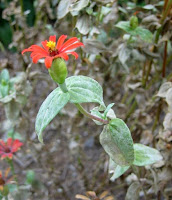
These zinnias are red spider zinnias - much smaller than I expected, and much more susceptible to powdery mildew. Based on experience this year, these are not recommended since they were short, had smaller blossoms (some no bigger than a dime), made poor cut flowers with their short stems, and were powdery mildew magnets.

Oregano
The small-leaf sweet oregano is ancient - probably 20 years old. This spring, its growth was stunted for some reason, and the usual 6-inch tall (15 cm) stalks with the leaves never appeared. The plant with its spicy leaves only grows in the cooler weather of spring and fall, so fingers are crossed that it will start to take off again soon. The flowers are produced in late summer and are always cut back to encourage fall growth. Maybe cutting the plant back to the ground will encourage new leaves this fall, or kill it for good.

Fungus
Alien invaders sprout up from time to time almost overnight. One year, a 'cat puke fungus' appeared in the front yard mulch. I thought it was exactly that, and after closer examination (umm, yes I did get closer) the blob was discovered to be a fungus, so I named it after its resemblance. An internet search seems to match descriptions and photos for a 'jelly fungus'. That irregular shaped fungus appeared as a coating on the mulch - orange and white and shiny - looking like the wet guts of a pumpkin thrown on the ground. However, cat puke elicits a more accurate response to its appearance. (It added some summer color to the shady spot under the mountain laurel.) This year, the 4-inch high (10 cm) E.T. fungus has landed. There are actually two growing, and nothing resembling this asymmetrical creature can be found in the online fungal photo directories.

Garden Calendar:
• Blooming: silver salvia, nicotiana, cosmos, sunflowers, canna, zinnias, castor, basil
• Harvested: 15 tomatoes
• Bell peppers begin turning red